The Confederation of African Football (CAF) has reversed its controversial plan to stage the Africa Cup of Nations (AFCON) every four years, confirming that the continent’s biggest football tournament will return to its traditional two-year cycle.
The decision was unanimously approved by CAF’s Executive Committee on Thursday, October 29, 2026, ending months of uncertainty over the competition’s future format.
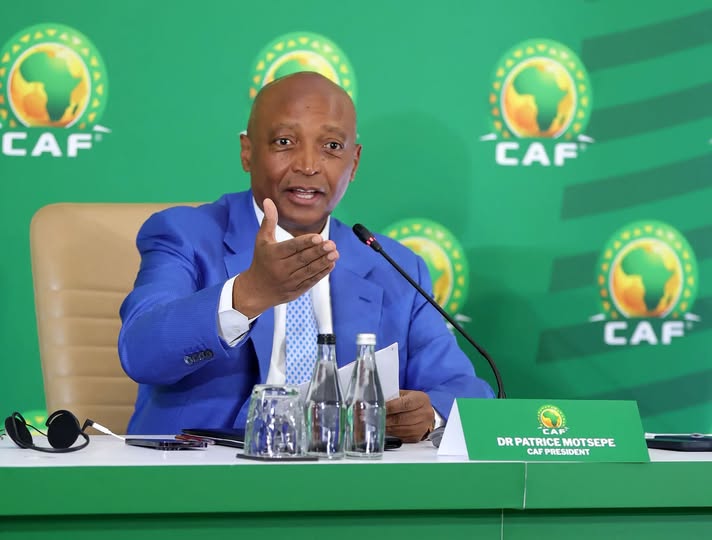
CAF President Patrice Motsepe had earlier indicated that the governing body would reconsider its decision to move AFCON to a four-year schedule following concerns about the financial implications for African football.
Under the revised calendar, the next four editions of the tournament will take place in 2027, 2028, 2031 and 2033.
Kenya, Tanzania and Uganda will jointly host the 2027 edition, while the subsequent tournaments are scheduled for 2028, 2031 and 2033. No AFCON final tournament will be held in 2030, when the FIFA World Cup is scheduled to take place.
CAF said the reversal followed recognition that its proposed Africa Nations League would require several years to generate the financial resources needed to support the development of African football and make its competitions globally competitive and financially sustainable.
The proposed competition had been expected to replace AFCON as the continent’s major biennial national-team tournament after the shift to a four-year AFCON cycle.
However, CAF acknowledged that the new league would not be able to deliver the expected financial benefits quickly enough to meet the needs of the continent’s football associations.
Motsepe said the decision to restore the two-year cycle was intended to protect the interests of African football, CAF’s 54 member associations and African players competing for clubs outside the continent.
The reversal restores AFCON’s traditional place on the African football calendar after CAF announced the proposed four-year cycle in December 2025.
The biennial format has long provided national teams across the continent with a regular opportunity to compete for Africa’s biggest international football title.
CAF said the decision would contribute to the growth and development of African football while preserving the tournament’s role in celebrating the continent’s cultures, traditions and sporting talent.
With the next edition set for 2027, attention now turns to preparations by co-hosts Kenya, Tanzania and Uganda for the tournament.
The latest decision settles the immediate question over AFCON’s frequency, although CAF’s plans for the proposed Africa Nations League remain a key issue in the future organisation of continental football.