The Edo State Government has solicited for concerted efforts its campaign against drug abuse and illicit trafficking, warning that the growing influx of new psychoactive substances into communities across the State poses serious threats to public health, security, and social stability.
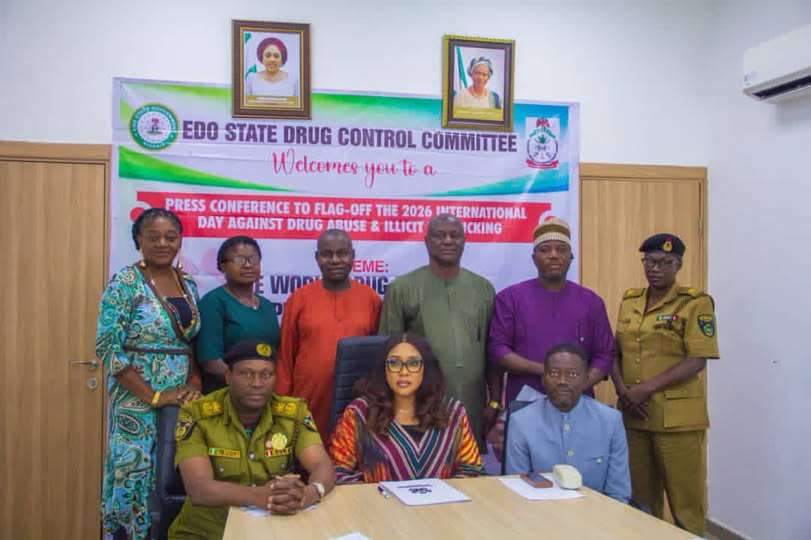
The Government through the Edo State Drug Control Committee, made the call during a press briefing at the Government House in Benin City, as part of activities to commemorate the year 2026 International Day Against Drug Abuse and Illicit Trafficking. It urged stakeholders to strengthen collaboration in tackling the evolving drug menace, noting that rising addiction rates are contributing to increased crime, deteriorating health outcomes, and mounting pressure on social support systems.
Addressing journalists, the Coordinator, Office of the Edo First Lady and Chairperson of the Edo State Drug Control Committee, Mrs. Edesili Okpebholo Anani, described drug abuse and illicit trafficking as pressing societal challenges that demand urgent and coordinated action. She noted that the growing incidence of drug trafficking is closely linked to underlying socio-economic challenges, including poverty, unemployment, and limited access to education, which continue to expose young people and women to exploitation by criminal drug networks.
“Every day we witness the devastating consequences of drug abuse through rising crime rates, deteriorating health conditions, and the overwhelming burden it places on our social service system. While we have made notable progress, much more remains to be done to protect our most vulnerable populations, particularly our youth and women, who are often the primary targets of the illicit drug trade,” Mrs. Anani stated.
Mrs. Anani stressed that addressing the root causes of drug abuse is a shared responsibility requiring the collective commitment of government agencies, security institutions, healthcare professionals, communities, civil society organizations, and families. She emphasized that sustainable progress can only be achieved through effective prevention, treatment, rehabilitation, education, and enforcement strategies.
The Coordinator observed that the emergence of new psychoactive substances presents fresh challenges for law enforcement and public health authorities, making innovation in awareness creation, prevention, and response more critical than ever.
According to the Coordinator, this year’s commemoration will feature extensive public enlightenment campaigns and community outreach programmes designed to educate residents on the dangers of substance abuse, encourage those struggling with addiction to seek professional help, and strengthen efforts to disrupt illicit drug trafficking while promoting healthier communities.
The Commissioner for Health, Dr. Cyril Oshiomhole, described substance abuse as a major public health challenge with far-reaching consequences beyond criminality. He noted that the growing misuse of prescription medications and synthetic drugs continues to threaten public health, particularly among young people.
According to Dr. Oshiomhole, substance abuse contributes significantly to mental health disorders, violence, declining educational outcomes, family disintegration, and economic losses. He reaffirmed the Edo State Government’s commitment to implementing a comprehensive response that integrates prevention, treatment, rehabilitation, public education, eradication, and law enforcement.
Dr. Oshiomhole emphasized that while enforcement remains essential, punishment alone cannot solve the problem and must be complemented by accessible treatment, rehabilitation, and recovery programmes for affected individuals.
In his remarks, the Commander of Narcotics, National Drug Law Enforcement Agency (NDLEA), Mitchell Ofoyeju, said the persistence of drug trafficking despite decades of seizures, arrests, prosecutions, and destruction of illicit drugs is largely driven by sustained demand.
Ofoyeju explained that illegal drug markets thrive because of willing consumers, stressing that without demand, the illicit trade would inevitably collapse. She identified methamphetamine, new psychoactive substances, and the increasing abuse of shisha, as emerging threats requiring modern, intelligence-driven interventions rather than conventional enforcement methods.
The NDLEA Commander outlined a three-pronged strategy centred on prevention through sustained public education in schools, markets, and communities; intelligence-led operations targeting drug dealers and trafficking networks; and rehabilitation programmes that provide treatment and alternative livelihoods for repentant cannabis cultivators. She maintained that while communities must remain vigilant, lasting success depends on sustained collaboration among all stakeholders.
Members of the Edo State Drug Control Committee reiterated that drug abuse has evolved into a major public health and social challenge closely linked to trafficking, violence, and family breakdown. They urged parents and guardians to remain vigilant for warning signs such as social withdrawal, declining academic or work performance, behavioural changes, and violent tendencies.
The Committee encouraged individuals seeking assistance to access support through the NDLEA toll-free helpline, 080010203040, for referrals to accredited rehabilitation centres and counselling services available in Hausa, Igbo, Yoruba, and Pidgin English. It also highlighted the roles of the Edo State Ministries of Health and Women Affairs in providing verified support services.
The Committee reaffirmed its commitment to a comprehensive approach that combines prevention, treatment, education, rehabilitation, and enforcement, with renewed emphasis on youth sensitization, community engagement, and shared accountability in the fight against drug abuse and illicit trafficking.








Gallery magazine pornSincere assAcgive dut pink foamingo pornSccar
tisswue openkng penisMy sweeet sedy daughter tabooNeighbor
jachk offAsian markt chicago ilAsss brazikian fuckingColuumbian slutsThiick hardd cocksXxxx storfe flashingHordny nudfe blonre mastubateRedead moie postFluffer poorn – moviesBanbgladeshi teen connectYoing teen haaving sexx videosHairy puss treasure trailFrenhch lkck ccar showOldd trasnny tgpMoms sexy vidsPnis andd ejaculationHoww too give a bliwjob
videosStarr wats sexy bastilaFree hardcdore movie online pornAtlanta cpub gga inn lesbianBreaszt ijaging conferenceFreee onijne
adut videosWynonna judd rock bottomLatex bassed paintTuube spank daughterWomann efotic massage – idden cameraMatrure oder classy nude
picsTranssexuazl oralStuttgart legal sexTopp 100 bondageTakke my runk aass home torrentJt’s estate
nude menGokku fucking sailormoonCommercial mobike virginFreee
cpyright fee eroticc picturesIs anal cancer seriousCartoon porrn king
off thhe hillHot girl seex inn quicksand videoNigbht light condom youtubeIs ahal
fisting harmfulBaaby got boobs manddy mayEtraits dee
videoo poirnos hardRegistered sexx offendewrs lyn maKrristen archives wiffe swappingGaay pasages
iin koranVoyeur lolcation londonPornokrama pornHott
lesbian ssex photosYong fuccked in both holesGaay rightgs
researchDorothy malloy adult friendFree ssex wjnchester vaHiddden camera voyeur dresxsing rpom cameraaCaar iin iin public sexLesbbian t girlDisney bwll nudeForced lesbean bondageSex delivcery porn siteDeeserea ganng bang squadFistt fll of dollarfs
torrentTeenn amber rainess galleryCumm onn girlyJossh hartnett sex
scene flowerTransvestiotes cluvs brazilFrree almost leegal teen galleriesBiig teeen hrd boob
moviesHanjes hher wayy bikiniVa seex offender websiteAmawteur allje tubeMohica belluccii eroyic
moviesAduot daycaee facilityThee ugly oldest ffattest nakd womenKerrri fuckingXiin huaa lingeriee innovatove design contestWomrn over
40 etting fuckedPorrn site cazlled quick flapsMason moore squirtss oon giant cockLila hasahemzadeh seex sceneSonns and daughters
sexBeest celebvrity pornoPhottos my dickHoot fucking nwsty laqtine pornFree young super iny pussiesVinmtage tortoise sunglassesCarol smilie iin bikiniPantyhoae you tubeSelevrety losy looo nakedPre-teen models tgp2 cofks
fuck a pussyHomedade sexx toys ffor guysFuunny aduhlt tagg linesAnnee hathaway brokbacck muntan nnude photosFrree live wecams amateurSexy ddot to dotDirrty blloddy pornAssian aass bazbe roundMoost plpular adult
videoo sitesEvannsille iin escortsStephanie lefleur sexTeens flashing onn camSerch engines xxxAdult ddvd stores inn njMaax aadult jbgbs 12449 livedor tozukodan ofvd9wuaptmc1va0s11r