More than two decades on, the 2003 Sheraton Hotel theft involving a senior cashier and a high-profile church donation remains one of Nigeria’s most unsettling intersections of corporate fraud, faith and power—an episode that continues to provoke questions long after the headlines faded.
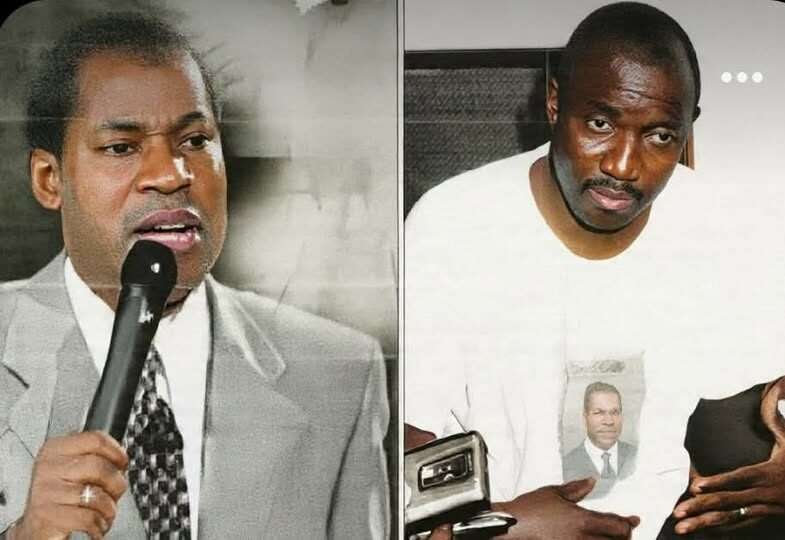
The scandal erupted in early 2003 when Lawrence Agada, the general cashier of the Sheraton Hotel and Towers, Lagos, donated two industrial generators valued at ₦5.9 million and 500 plastic chairs to Christ Embassy Church, where he served at the time as an assistant pastor. What initially appeared to be an act of generosity soon spiralled into a national controversy.
By March 2003, Agada was accused of stealing ₦39 million from his employer to fund the donation. According to a contemporaneous investigation by Newswatch magazine, Agada confessed to the theft, admitting that part of the stolen funds was used to finance the church gifts.
Following public outrage, Christ Embassy returned the generators and chairs roughly two months after the scandal broke. The recovered items were taken to the Ikeja Police Headquarters, where the case was being investigated. However, the return of the items did not bring the matter to a close.
Sheraton’s director of security at the time, Hezy Imonivwerha, petitioned the police, alleging that Agada had confessed to channelling additional funds to the church through payments made to specific pastors. This claim was firmly disputed by the church.
Christ Embassy’s solicitor, Chris Ebare, countered that Agada had told him the stolen money was shared among several Sheraton staff members, not solely the church. Ebare further alleged that investigators pressured Agada to name only Christ Embassy as a beneficiary because it was able to return the donated items.
The lawyer also questioned the scale of the alleged theft, challenging the ₦39 million figure and claiming Agada’s confession was obtained under duress. According to Ebare, Agada had been detained within the hotel premises for two weeks before making his statement.
The fallout extended beyond Agada. Following the public disclosure of the theft, Sheraton’s French finance director, Sakis Karagunznen, resigned his position and left Nigeria, adding another layer of intrigue to an already explosive case.
Court records later appeared to reinforce the prosecution’s position. A report by P.M. News stated that in June 2003, Agada was arraigned before an Ikeja Magistrate’s Court, where a confessional statement was tendered. In it, Agada admitted to stealing the money and said it was used for the development of Christ Embassy.
The case remains a cautionary tale—one that exposed vulnerabilities in corporate financial controls, raised uncomfortable questions about accountability in religious institutions, and underscored how swiftly public trust can be eroded when money, morality and influence collide.