
Our reporter
The Nigerian National Petroleum Company (NNPC) Limited has officially ceased importing refined petroleum products, opting to source fuel exclusively from domestic refineries.
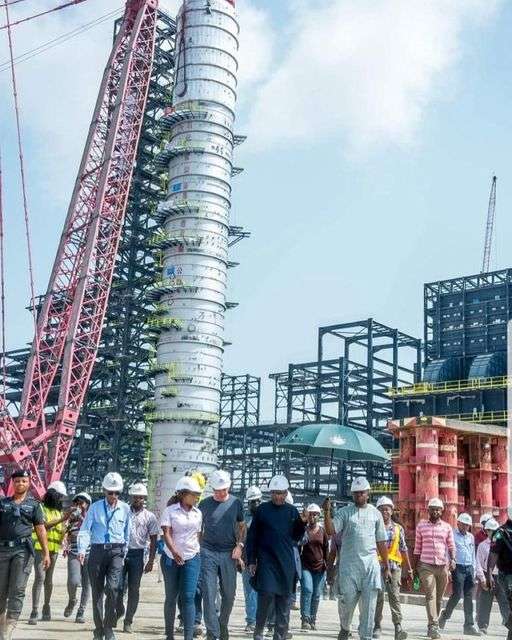
This move marks a significant shift towards energy self-sufficiency, with the NNPC now relying on the capacity of local refineries, including the recently operational Dangote Petroleum Refinery, to meet Nigeria’s fuel needs.
Speaking at the 42nd Nigerian Association of Petroleum Explorationists (NAPE) conference in Lagos, NNPC Group CEO Mele Kyari emphasised the strategic importance of this transition. “NNPC now sources all of its fuel from domestic refineries,” he stated, underlining the decision as part of a broader strategy to strengthen Nigeria’s energy security and reduce dependency on foreign supplies.
In line with recent deregulation policies, the Nigerian government has also ended the NNPC’s role as the sole off-taker for refined products, now allowing private marketers to directly purchase fuel from domestic refineries.
Kyari dismissed claims that NNPC has resisted local refining efforts, reaffirming its support for Nigerian refiners. “We are part-owners of Dangote Refinery and fully committed to promoting local refining capacity,” he said.
Kyari explained that NNPC identified an opportunity to lock in supply for local refineries, ensuring the sale of 300,000 barrels of crude oil from Nigeria’s production to satisfy domestic demand. He highlighted that Nigeria’s high-quality, “Lamborghini” crude is typically blended with lower-grade oil in global markets. By directing it to local refineries, the country could better manage supply and pricing for its high-grade crude.
Addressing public discussions on pricing and quality concerns, Kyari commented on the relativity of fuel quality to vehicle types, suggesting that Nigeria’s market requires adaptable solutions. “If you’re driving a Keke-Napep, you don’t need Lamborghini fuel,” he explained, underscoring that the NNPC aims to make quality products available while balancing affordability.
Kyari also refuted claims that NNPC was resistant to selling crude to the Dangote Refinery in naira. He clarified that such transactions in naira would neither harm NNPC’s finances nor constitute sabotage.
“Selling in naira is a net zero gain – it impacts neither positively nor negatively but is a neutral transaction,” Kyari stated.
He commended President Bola Tinubu’s administration for supporting this policy, as settling fuel sales in naira could help stabilize Nigeria’s foreign exchange market and control inflation.
By focusing on a domestically sourced supply chain, the NNPC aims to contribute to Nigeria’s economic resilience, potentially easing FX pressures and enhancing self-reliance in the energy sector.