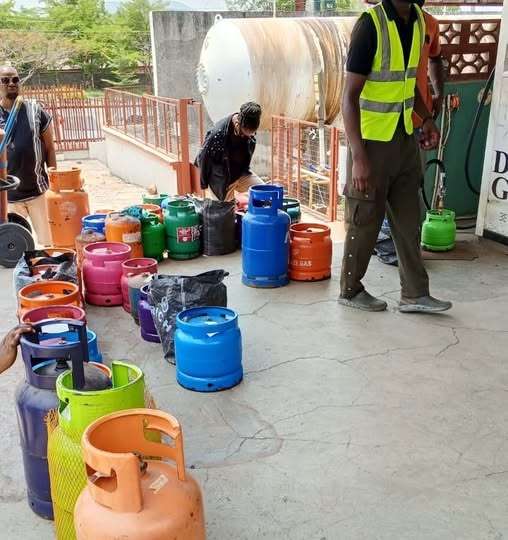
The continuous rise in the price of cooking gas (LPG) in Nigeria has become a serious challenge for many households, especially low and middle-income families who depend on it for daily cooking. As the cost of refilling gas cylinders increases, many families are forced to adjust their spending patterns, reduce how often they cook, or ration gas usage to make it last longer within the household budget.
This situation has also led some people to turn to cheaper and less convenient alternatives such as charcoal, kerosene, and firewood. While these options may help reduce immediate expenses, they are often time-consuming and come with health risks due to smoke inhalation. Prolonged exposure to such fumes can cause respiratory problems, eye irritation, and other health complications, particularly for women and children who spend more time around cooking areas.
A resident, Agboyaga Janet in Benin city who spoke with Uptown Press in an interview lamented that it’s been so tough on her family, she said that they used to eat two square meals but now they’re struggling to eat just one good meal a day, they no longer use LPG to cook due to the hike in gas,they now use charcoal stove which takes longer time and is very stressful to ignite,she lamented for a while and then said “it is well,God go help us”with sadness in her eyes and little to no hope.
The rising cost of cooking gas also places additional financial pressure on households, forcing families to cut down on other essential needs like food quality, healthcare, education, and general welfare in order to cope with rising energy expenses. Small-scale food vendors and local businesses are not left out, as they struggle with increased cooking costs, which often leads to higher food prices for consumers.
Overall, the rising price of cooking gas affects not only household cooking but also the broader economy, increasing the cost of living and placing significant pressure on both families and commuters.