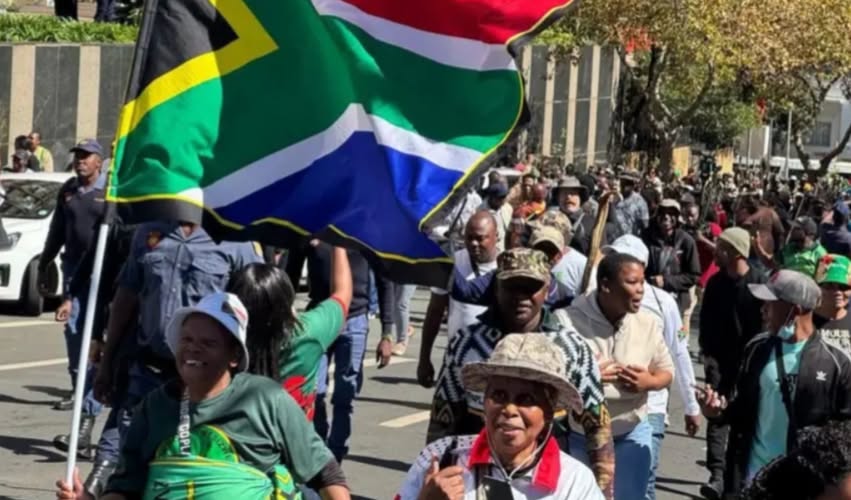
Anti-immigration protesters in South Africa have confronted Nigerians living in Pretoria’s Sunnyside neighbourhood, demanding to know who authorised them to identify the area as “Little Lagos”.
The confrontation occurred on Wednesday, November 18, during an anti-immigration demonstration organised by the March and March movement, led by controversial South African activist Jacinta Ngobese-Zuma.
The protesters marched into Sunnyside, an area with a significant Nigerian population, and challenged Nigerian residents to come out and explain why the neighbourhood is popularly associated with Lagos, Nigeria’s commercial capital.
Addressing the Nigerian community from outside houses occupied by Nigerians, Ngobese-Zuma demanded an explanation for the nickname.
“I am being told here that we’ve entered Sunnyside, the home of Nigerians. I am inviting Nigerians to come out, let’s talk to each other.
“We want to know who gave you this place and called it Nigeria. Who gave you permission to call this place Lagos or whatever you call it?” she asked.
The activist subsequently escalated her attack on Nigerians in a Facebook post on Thursday, making a series of disparaging allegations against Nigeria and its citizens.
“Their President is wanted for drug trafficking, their country is also a hub for drugs and some very delusional people think that Nigerians will contribute more than just drugs, prostitution, human trafficking and Jollofinas to our country?” she wrote.
The protest has reignited concerns over rising anti-immigrant sentiments in South Africa, with the Nigerian community increasingly caught in the crossfire of heated debates over immigration, national identity and the presence of foreign nationals.
Sunnyside, popularly nicknamed “Little Lagos” because of its sizeable Nigerian population and the presence of Nigerian-owned businesses, has become a focal point of the latest controversy.
The confrontation has also raised fresh questions about the treatment of African migrants in South Africa and the growing tensions between local communities and foreign nationals.