From Balogun Omeiza David (BOD) 08069740330
Nigerian politics has entered a season where the microphone is no longer enough; the body must now speak, the waist must move and, apparently, somebody must shout “Energy!” from the sidelines.
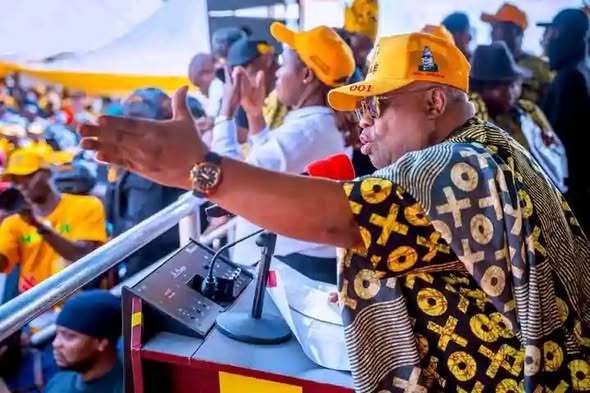
Governor Ademola Adeleke of Osun State is Nigeria’s most celebrated dancing governor, whose public appearances often come with enough gyration to make even a seasoned drummer ask for a breather. Adeleke dances with such enthusiasm that his body sometimes wriggles like an earthworm reacting to salt sprinkled on it. Yet, to be fair, dancing is not a crime, nor is merriment evidence of incompetence.
The Bible itself tells us that King David danced with all his might when the Ark of the Covenant was being returned to Jerusalem. David’s dance was an expression of joy and worship, not a resignation from responsibility. So, if Adeleke chooses to dance, let nobody hang him for it. Picking from one of the many Ebira proverbs, “A man who dances does not have two left feet.” This translates to the fact that a leader who smiles does not necessarily have an empty head. The real question is not whether the governor can dance, but whether, after the music stops, he can still make governance move.
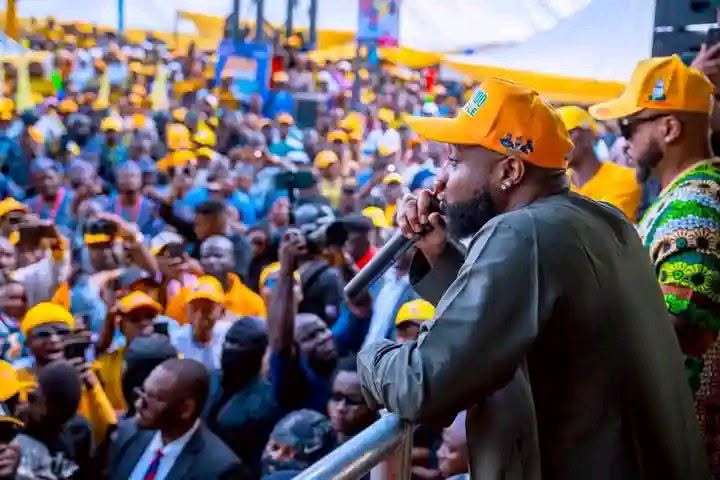
Governor Monday Okpebholo of Edo State has successfully added another curious ingredient to Nigeria’s evolving political theatre which is his use of a hype man. The hype man, with his energetic voice, praises, exclamations and ability to whip a crowd into frenzy, could easily remind students of African drama of the traditional court praise singer or the court jester who occupies the king’s palace, entertaining the monarch and celebrating his greatness.
Shakespeare also gave us memorable court jesters whose humour could amuse the king while, sometimes, allowing uncomfortable truths to sneak through the back door of comedy.
But there is a clear cut difference between a king and a governor: the king may demand royal applause; the governor is a servant of the people. A hype man may make a political gathering lively, but he cannot hype a bad road into a good one, cannot shout unemployment away and cannot turn an empty hospital pharmacy into a well stocked one.
That is why an Ebira proverb says, “You can polish a calabash, but you cannot fill it with soup by simply polishing it.” Hype may attract attention, but attention is not the same thing as achievement.
What we are witnessing, therefore, may be the birth of a new political entertainment culture in which dancing, music, theatrics and hype are becoming part of the electoral toolkit and there is nothing wrong with this evolving trend. Politics has always involved symbolism, emotion and spectacle. We are presently in an age where a 30-second video can travel farther than a 30 page manifesto, politicians understandably want to be seen, heard and remembered.
Adeleke’s dancing gives him a distinctive political identity; Okpebholo’s hype man gives his public appearances a touch of showmanship. An Ebira proverb says, “The child who knows the road to the market does not need to be dragged there.” Politicians know that visibility can be politically valuable. But there is a thin line between connecting with the people and turning government into a travelling circus. When the performance becomes louder than the policy, the tail begins to wag the dog. Elections are not won permanently by choreography. A politician may dance into the headlines today and still dance out of office tomorrow if the people cannot point to tangible improvements in their lives.
So, is hyping becoming a new norm in Nigerian electoral campaigns? It certainly appears to be knocking loudly at the door. Political campaigns have increasingly embraced entertainers, comedians, musicians, influencers and other popular figures because politicians understand the power of emotional communication. The hype man is simply another extension of this strategy.
But Nigerians must not confuse noise with news, popularity with productivity, or applause with approval. The electorate can dance with a politician at a rally and still vote according to its stomach, security concerns, economic realities and assessment of governance. A crowd may scream today because the music is sweet, but tomorrow it may ask why the road remains filled with potholes as deep as the abyss. That is why an Ebira proverb says, “When the masquerade dances too long, the drummer eventually asks who will pay for the broken drum.” The hype may gather the crowd; only credible performance can retain the crowd.
And therein lies the real political arithmetic.
Adeleke’s dancing, therefore, should be viewed with humour rather than unnecessary outrage, just as Okpebholo’s hype man should not automatically be treated as evidence of unseriousness. Leaders are human beings; they have personalities, emotions and different ways of connecting with citizens. If king David in the Bible could dance before the Ark to the point that his garment went off, there is no reason every modern political dance must be treated as sacrilege. The danger, however, comes when the dance becomes a substitute for delivery and the hype becomes a substitute for accountability.
Nigerians do not need governors who look permanently miserable before they are considered serious. What they need are governors whose roads, schools, hospitals, security architecture, employment opportunities and economic policies give people reasons to celebrate and join them in dancing and hyping. A good dancer is appreciated for his steps, but a good leader is remembered for where he leads his people. Let us allow the governors to dance; let their hype men hype. But let the dancing be accompanied by development and the hype be backed by results.
At the end of the day, the ballot box has no dance floor and no hype man. When the campaign drums fall silent, the microphones are switched off and the social media cameras disappear, the people remain with the consequences of governance. The ultimate question will not be, “How well did the governor dance?” or “How loudly did the hype man shout?” It will be, “What did this man do with the mandate we gave him?” That is where we will know if the rubber used in manufacturing the tyre of a car is good when it meets the road.
Political entertainment can win attention; it can even soften the image of a politician and create emotional attachment. But it cannot permanently replace performance. You can hype a politician into the headlines, but you cannot hype him into history. History is written by achievements and not by the highest sound made.
So, if Adeleke wants to dance, let him dance like David but let him govern like a man entrusted with a kingdom. If Okpebholo wants a hype man, let the man raise the roof but let the governors raise the standard of living of their people. For it is when the music stops, governance begins.
To finally put the icing on the cake, let our political office holders be well aware that the sweetest political song is ultimately the sound of a people saying, “OUR LIVES HAVE BECOME BETTER UNDER YOUR LEADERSHIP!”
Balogun Omeiza David is a Media Consultant. He sent this piece from Kogi State.