The Edo State Commissioner for Environment and Sustainability, Hon. Nosa Adams Esq., has reassured communities bordering the Ikpoba Hill River that the discharge of treated effluent from the Nigerian Bottling Company (NBC) into the river poses no environmental or public health risks.
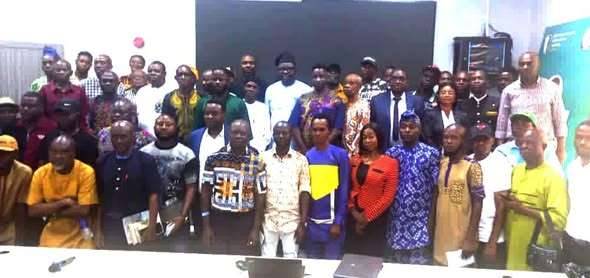
Hon. Adams gave the assurance during a stakeholders’ engagement at the John Odigie-Oyegun Public Service Academy in Benin City, where representatives from concerned communities, Edo State Government officials, environmental stakeholders, and the NBC officials, discussed concerns relating to the Company’s effluent treatment and pipeline project.
The Commissioner, represented by the Permanent Secretary of the Ministry of Environment and Sustainability, Mr. Enodolomwanyi Otamere, highlighted the State Government’s commitment to transparency, environmental protection, and inclusive dialogue. He explained that the meeting aimed to clarify issues and encourage collaboration rather than confrontation, emphasizing the vital role of effluent treatment plants (ETPs) in ensuring industrial wastewater is properly treated before being released into the environment.
Hon. Adams detailed that well-managed ETPs protect rivers, soil, and public health, while non-compliance could lead to serious environmental and health hazards, underscoring the importance of strict adherence to standards and independent verification.
Following concerns and petitions from host communities, the Ministry initiated an independent environmental assessment. This review, supervised by the Ministry’s technical Team, with academic experts, included site inspections, water sampling, and laboratory analysis, to evaluate the safety of the effluent discharge.
Presenting the results, the Commissioner confirmed that the effluent treatment processes complied fully with environmental regulations. He assured that the treated water discharged into the Ikpoba Hill River is safe and poses no threat to human health or the environment, likening it to recycled water of high environmental safety standards.
He further emphasized that NBC has met all regulatory requirements, including obtaining necessary approvals and following established guidelines and international best practices.
The Commissioner pledged ongoing routine monitoring by the Ministry and commitment to maintaining open communication channels with host communities to promptly address any environmental issues.
In a technical presentation, the NBC’s Environmental Manager, Mr. Emmanuel Animashaun, outlined the Company’s wastewater treatment processes. He noted that NBC operates in compliance with state and federal environmental regulations and maintains internal standards that exceed regulatory requirements.
Mr. Animashaun revealed that NBC recently upgraded its ETP to a new facility with a capacity of 2,500 cubic meters, which he claim is significantly larger than the previous system. He disclosrd that the upgrade included modern infrastructure such as high-density polyethylene (HDPE) pipelines designed to enhance durability and environmental safety
Additionally, Mr. Uwadiae Eseosa, a consultant from Argon Environmental Limited, explained that an Environmental Impact Assessment (EIA) was conducted in accordance with regulatory requirements. He stated that the EIA involved site inspections, water sampling, preliminary on-site testing, and comprehensive laboratory analysis to assess the physicochemical properties of the samples.
A representative of the host communities, Mr. Osagie Chris Efosa, expressed satisfaction with the findings and commended the Edo State Government and stakeholders for their efforts. He appreciated the Commissioner for his support and facilitation, as well as all participants from the host and impacted communities, acknowledging their essential contributions to the success of the engagement.
The engagement is a testament to the Edo State Government’s commitment to protecting public health, safeguarding the environment, and ensuring strict compliance with all environmental standards governing industrial operations within the State.