Fresh revelations from an investigation by The New York Times have thrown Nigeria’s controversial 2026 FIFA World Cup qualification exit into fresh turmoil, with documents reportedly showing that FIFA officials knew Democratic Republic of Congo had fielded an ineligible player against the Super Eagles.
The player at the centre of the controversy is DR Congo goalkeeper Lionel Mpasi, whose international switch from France to DR Congo had reportedly not been completed in accordance with FIFA regulations.
According to the investigation, FIFA’s legal officials established that Mpasi had not completed the required process to change his international affiliation after representing France at youth level.
Despite the finding, FIFA allowed Mpasi to continue featuring for DR Congo, including in the decisive African play-off final against Nigeria in November 2025.
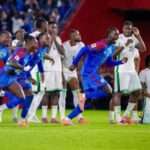
DR Congo defeated Nigeria 4-3 on penalties after a 1-1 draw in regulation and extra time, securing a place in the inter-confederation play-off.
The Leopards subsequently defeated Jamaica to secure qualification for the 2026 World Cup.
The latest revelation has reopened the controversy surrounding Nigeria’s failed qualification bid, particularly because the Nigeria Football Federation had formally challenged the eligibility of DR Congo players following the defeat.
Reports indicate that FIFA considered several possible responses to Nigeria’s complaint, including awarding Nigeria the match, replacing DR Congo with Nigeria in the subsequent play-off, imposing a fine or dismissing the complaint on procedural grounds.
According to reports based on documents reviewed by The New York Times and other investigations, FIFA’s legal officials later determined that Mpasi’s change of association had not been properly completed.
Previous FIFA decisions have seen teams punished for fielding ineligible players, including cases involving Greece and Bolivia.
The latest disclosure has therefore intensified questions over the consistency of FIFA’s enforcement of its player-eligibility regulations.
FIFA, however, has maintained that its judicial bodies operate independently and make decisions based on applicable regulations and the specific facts presented before them. The governing body has also denied any interference by its president, Gianni Infantino.
The Nigeria Football Federation has yet to secure a reversal of the outcome that saw the Super Eagles miss the World Cup, but the new findings have placed the handling of the case under renewed scrutiny.
Nigeria’s defeat to DR Congo remains one of the most consequential setbacks in the Super Eagles’ recent history, and the fresh allegations have raised the possibility that the circumstances surrounding the qualification process could face further examination.