
Our reporter
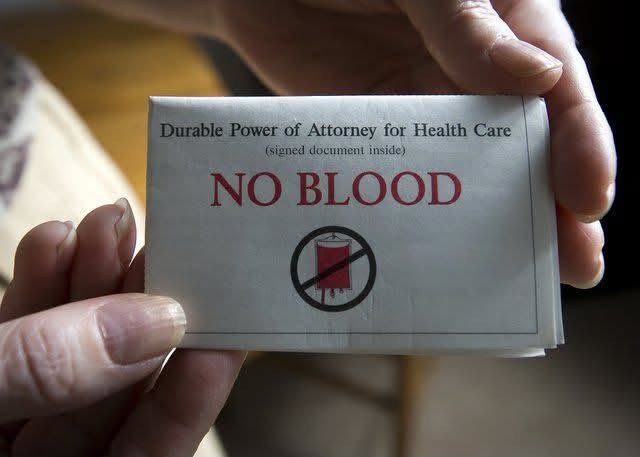
The Jehovah’s Witnesses’ decades-old policy on blood transfusions is facing renewed scrutiny following estimates that more than 46,000 members may have died over the years after refusing blood on religious grounds.
The Alliance for Jehovah’s Witnesses Research and Bioethics (AJWRB) estimates that approximately 46,544 excess deaths may have occurred between 1961 and 2016 under the organisation’s historical blood-refusal policy.
The figure, however, is an epidemiological estimate rather than an official death toll. The Watch Tower Society has never published aggregate mortality statistics showing how many Jehovah’s Witnesses died after refusing blood transfusions.
The controversy has gained fresh momentum following a major change in the organisation’s doctrine.
In September 2026, the Governing Body of Jehovah’s Witnesses announced that individual members may now decide according to personal conscience whether to accept donor red blood cells, white blood cells, plasma or platelets.
The organisation has maintained its prohibition on whole-blood transfusions.
The latest position represents a significant shift from teachings that for decades instructed Jehovah’s Witnesses to reject blood transfusions as contrary to God’s law.
According to AJWRB, the 46,544 estimate was produced through epidemiological extrapolation using published medical research and historical membership figures.
The organisation says its medical adviser, Dr Osamu Muramoto, and science adviser Marvin Shilmer independently analysed available medical literature to estimate the potential mortality associated with the policy.
AJWRB also produced a lower estimate of approximately 33,246 deaths using a more conservative mortality factor.
The absence of official mortality data means that the precise number of deaths associated with the historical policy cannot be independently established.
Jehovah’s Witnesses introduced their prohibition on blood transfusions in 1945. The organisation later prohibited organ transplantation in 1967, describing it as comparable to cannibalism, before reversing that position in 1980 and making it a matter of individual conscience.
In 2026, the organisation also changed its position concerning the use of an individual’s own stored blood, allowing members to make personal decisions about it.
The latest change extends that conscience-based approach to the four major blood components: red blood cells, white blood cells, plasma and platelets.
The changes have reignited anger, grief and controversy among some former members, particularly those who say they lost relatives or friends after they declined blood transfusions because of their religious beliefs.
Medical research has established that refusing blood transfusion can increase the risk of death in some clinical circumstances, although outcomes vary according to the patient’s condition, the type of treatment involved and the availability of alternative blood-conservation techniques.
The central unresolved issue remains the actual human cost of the former policy.
Because the Watch Tower Society has not released comprehensive mortality figures, researchers cannot produce a definitive worldwide death toll.
The AJWRB estimate therefore remains a projection rather than a verified count of individual deaths.
Nevertheless, the organisation’s latest doctrinal reversal has placed its historic blood policy firmly back under public and medical scrutiny.
For former members and families who associate the previous policy with deaths or serious medical consequences, the change also raises difficult questions about responsibility, accountability and whether earlier decisions could have produced different outcomes.
The debate now extends beyond religion into the wider questions of medical ethics, informed consent, individual autonomy and the limits of institutional religious authority over healthcare decisions.