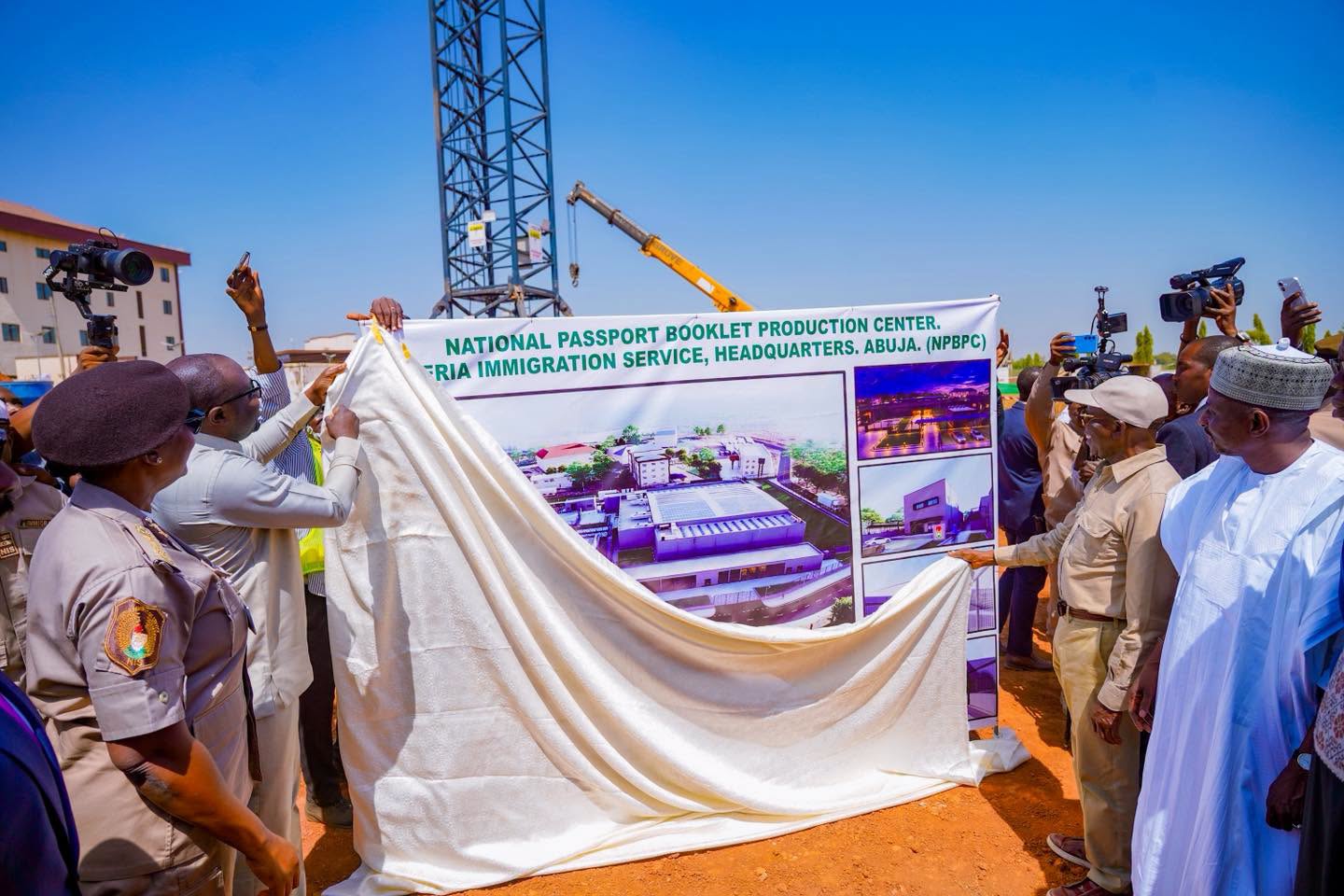
Nigeria is set to end its dependence on foreign countries for passport production as the Nigeria Immigration Service (NIS) begins construction of a National Passport Manufacturing Centre (NPMC) in Abuja.
The Minister of Interior, Olubunmi Tunji-Ojo, disclosed this on Friday during the groundbreaking ceremony at the NIS headquarters, describing the project as a major milestone in the Federal Government’s drive to achieve complete local production of Nigerian passports.
According to the minister, the facility, which occupies 1.1 hectares of land, will be AI-driven and completely off-grid, with the capacity to produce six million passport booklets annually by May 2027. The production capacity, he added, can be expanded to 10 million booklets yearly.
Tunji-Ojo said the project would not only eliminate Nigeria’s dependence on foreign manufacturers but also position the country as a potential exporter of passports to neighbouring African nations currently sourcing the sensitive travel document from Europe and the Americas.
He described the development as a significant national achievement, noting that Nigeria would become the first country in West Africa to establish an e-passport manufacturing plant and only the second in Africa with full e-passport production capacity.
“Under this administration, Nigeria will no longer import the sovereign document that carries our identity, and the price of the passport will no longer be dictated by foreign exchange rates,” the minister declared.
He explained that the passport localisation initiative began in 2023 with the automation of application and approval processes, followed by the introduction of the contactless biometric passport application system in 2024.
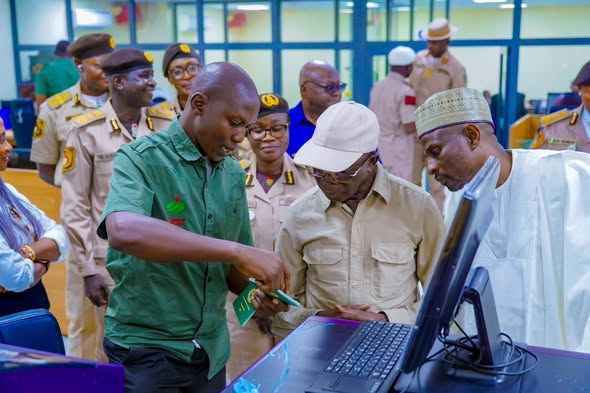
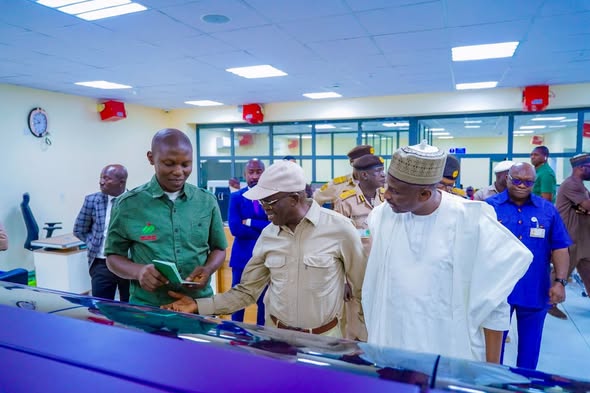
In 2025, the government established a passport personalisation centre, while the groundbreaking of the manufacturing plant marks the final phase of the initiative.
The minister further disclosed that the new facility would comfortably surpass Nigeria’s estimated annual domestic demand of about two million passport booklets.
Highlighting other reforms in the Nigeria Immigration Service, Tunji-Ojo said the agency had undergone significant technological transformation since the Tinubu administration assumed office.
He recalled that the NIS had no dedicated data centre when the government took over in 2023 but now operates what he described as one of the most advanced facilities in the country, across both the public and private sectors.
He also listed the deployment of the Advance Passenger Information (API) and Passenger Name Record (PNR) systems, the clearance of a backlog of 204,332 passports, the introduction of contactless passport renewals for Nigerians in the diaspora, and the activation of the e-visa platform among the administration’s achievements.
According to him, electronic gates have also been deployed at major Nigerian airports to strengthen border management and improve passenger processing.
Tunji-Ojo maintained that the achievements represented tangible results rather than political promises, crediting President Bola Ahmed Tinubu’s administration for providing the leadership behind the reforms.