
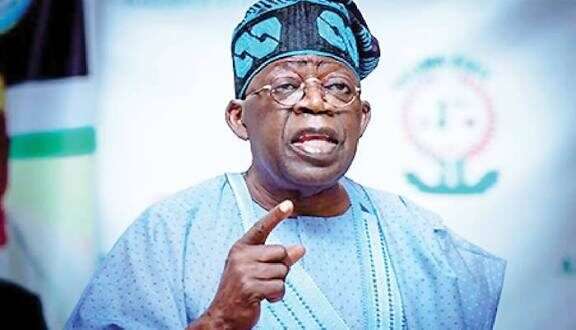
President Bola Ahmed Tinubu has defended his decision to approve United States air strikes on terrorist camps in Nigeria’s North-West, describing the operation as a carefully coordinated joint effort aimed solely at degrading violent extremist networks and safeguarding civilians.
The confirmation, conveyed through the Minister of Foreign Affairs, Yusuf Tuggar, came hours after U.S. President Donald Trump and the U.S. Department of Defense announced that American forces had carried out precision strikes on identified terrorist targets within Nigeria. The development has drawn intense public and political attention, given longstanding sensitivities around sovereignty and foreign military involvement.

Speaking on Channels Television’s Sunrise Daily on Friday, Tuggar said the strikes were undertaken with the full knowledge and consent of the Nigerian government, stressing that President Tinubu personally authorised the operation after clear assurances on its scope and intent.
“Now that the U.S. is cooperating, we are doing it jointly, and as the President emphasised before giving the go-ahead, it must be clear that this is a joint operation,” the minister said. “It is not targeting any religion, nor carried out in the name of one religion or another.”
Tuggar underscored that Nigeria’s collaboration with the United States and other international partners is driven by the urgent need to confront terrorism that has continued to threaten lives, livelihoods and national stability, particularly in the North-West where armed groups have expanded their reach.
He rejected suggestions that the strikes constituted a breach of Nigeria’s territorial integrity, insisting that the Federal Government would not sanction any action that compromises the country’s sovereignty.
“It is a collaboration. It is what we have been calling for,” Tuggar said, adding that Nigeria remains firmly in control of decisions affecting its security and borders.
The minister also reiterated Nigeria’s commitment to its multi-religious identity, cautioning against narratives that could inflame sectarian tensions. According to him, the operation was strictly security-driven and focused on neutralising terrorist threats, not communities or faith groups.