NLC President argues that TUC should have demanded a higher allowance instead of rejecting an agreement it did not negotiate, as disagreement deepens over the best approach to improving workers’ welfare.
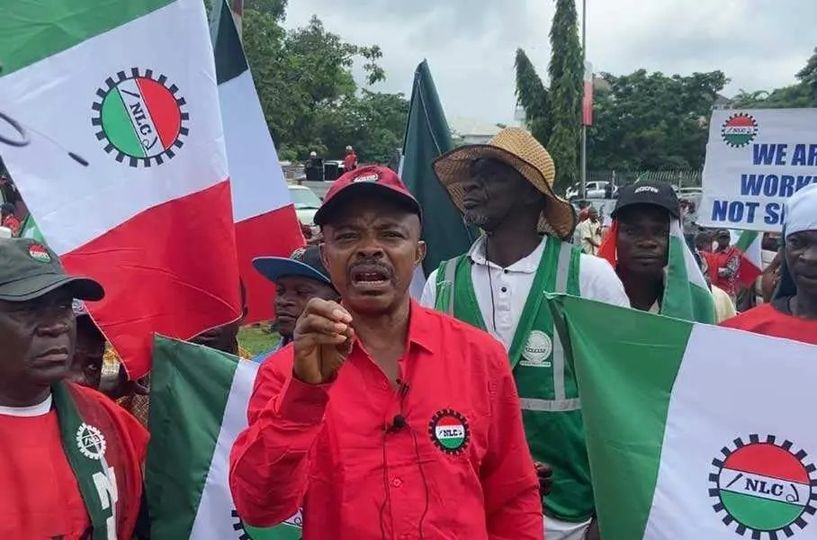
The President of the Nigeria Labour Congress (NLC), Joe Ajaero, has questioned the Trade Union Congress of Nigeria (TUC) over its rejection of the Federal Government’s proposed ₦70,000 monthly transport allowance for public servants, insisting that the congress neither participated in the negotiations nor signed the agreement.
Ajaero argued that the TUC should not oppose an arrangement negotiated independently by the NLC, particularly after the latter had publicly clarified that it was acting alone in its engagement with the Federal Government.
He made the remarks during an interview on Channels Television’s Morning Brief on Thursday, October 29, 2026, amid growing disagreement between the two major labour centres over the proposed transport allowance and the need for improved workers’ earnings.
According to Ajaero, the NLC had made its position clear from the beginning of the negotiations, making the TUC’s subsequent rejection of the outcome surprising.
He questioned why the congress would challenge an agreement it had neither negotiated nor signed, arguing that it could instead have demanded a higher allowance to strengthen organised labour’s bargaining position.
Ajaero said he would have preferred a situation in which the TUC proposed a higher amount than the NLC, allowing both labour centres and the government to work towards a common position.
He maintained that competing demands from the two unions could have encouraged further negotiations and potentially produced a more favourable outcome for workers.
The NLC president traced the disagreement between the two labour centres to differences over the timing of negotiations for a new national minimum wage.
According to Ajaero, the TUC president had reportedly maintained that negotiations for another minimum wage would become due in August 2027, a position the NLC disagreed with.
Ajaero said the NLC considered that position inconsistent with the applicable legal provisions and consequently decided to pursue its own engagement with the Federal Government.
He also recalled that when the negotiations began, media reports suggested that both the NLC and TUC were jointly meeting with government representatives.
However, he said the TUC subsequently distanced itself from the process, prompting the NLC to issue a statement clarifying that it was negotiating independently.
Ajaero maintained that the NLC did not present the negotiations as a joint effort involving both labour centres and questioned why the TUC would reject the outcome after distancing itself from the process.
He also emphasised that an increase in workers’ salaries requires a formal negotiation process involving the relevant stakeholders, rather than an automatic government decision without consultation.
The TUC has defended its position, arguing that temporary wage awards and allowances are inadequate to address the economic hardship facing Nigerian workers.
In a statement issued on Wednesday by its President, Festus Osifo, and Secretary-General, Nuhu Toro, the congress rejected the proposed ₦70,000 transport allowance and called on the Federal Government to implement an immediate salary increase.
The TUC argued that workers require sustainable improvements in their earnings rather than temporary financial interventions that expire without resolving the underlying problem of inadequate purchasing power.
The congress also maintained that the Federal Government could increase workers’ salaries without waiting for another national minimum wage negotiation, noting that the existing minimum wage establishes a wage floor rather than a maximum limit.
It proposed raising the salary of the lowest-paid federal worker to ₦300,000, with corresponding adjustments for other salary grades.
The TUC further expressed concern over outstanding obligations under the 2023 wage award arrangement, alleging that some workers had not received their full entitlements.
It also accused the Federal Government of failing to implement an agreement concerning adjustments to the Consolidated Health Salary Structure (CONHESS) for health workers under the Joint Health Sector Unions (JOHESU).
According to the congress, the agreement has remained unresolved for approximately seven months despite earlier commitments by the government.
Transport Allowance to Run for Six Months
The proposed ₦70,000 monthly transport allowance emerged from negotiations between the Federal Government and the NLC aimed at providing relief to public servants facing rising transportation costs and broader economic pressures.
Under the agreement announced on Tuesday, October 27, the allowance is expected to be paid for six months, beginning in November 2026.
The arrangement is intended to provide temporary financial support to public servants across salary levels amid the rising cost of commuting to work.
The government also agreed to address outstanding arrears of the 40 per cent peculiar allowance dating back to May 1, 2026, with payment scheduled in three equal monthly instalments beginning in November.
However, the TUC’s rejection of the transport allowance has introduced further disagreement within organised labour over whether temporary financial relief or an immediate salary adjustment would provide a more effective response to workers’ economic difficulties.
Workers’ Welfare at the Centre of Labour Dispute
The disagreement between the NLC and TUC highlights differences in strategy between the two labour centres as they seek better remuneration and improved living conditions for Nigerian workers.
While Ajaero has defended the NLC’s decision to negotiate separately and secure the transport allowance, the TUC insists that temporary payments cannot replace a substantial and sustainable increase in salaries.
The dispute comes amid continuing concerns over rising living costs, transportation expenses, fuel prices and the purchasing power of workers’ monthly earnings.
For federal workers, the immediate question is whether the proposed allowance will be implemented as agreed from November and whether the government will fulfil its outstanding commitments to organised labour.
The broader challenge remains how the government and labour unions can establish a sustainable framework for improving workers’ incomes while addressing unresolved agreements and the rising cost of living.