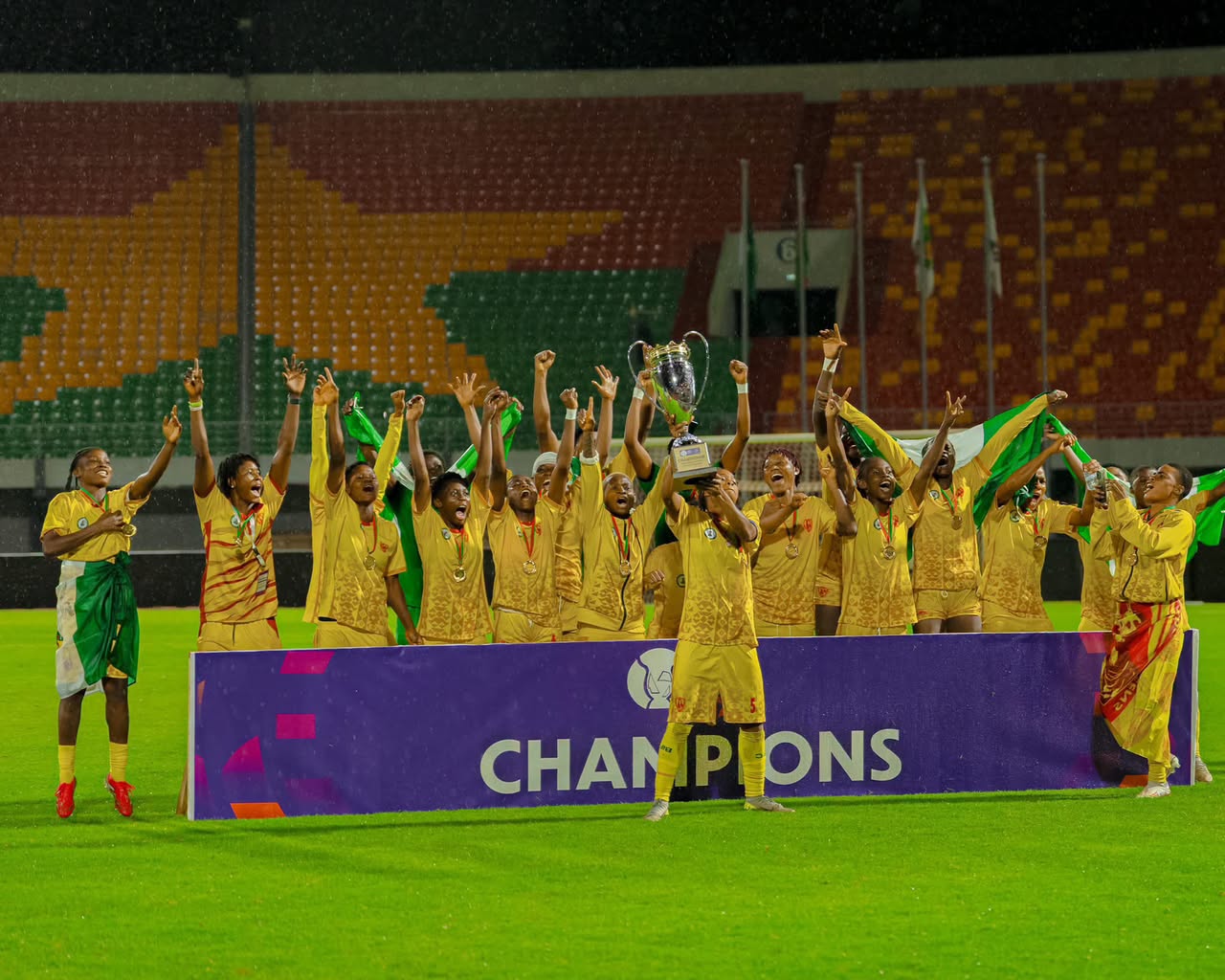
Edo Queens FC of Nigeria have expressed frustration over the handling of their Women’s Football Association (WAFU) Zone B final against Ghana’s Ampem Darkoa Ladies FC, calling for fairness and justice following a controversial decision that ultimately cost them qualification for the CAF Women’s Champions League.
The controversy began on September 5, 2026, when both teams met in the WAFU Zone B final, with the winner guaranteed a place in the CAF Women’s Champions League.
The match ended in a 2-2 draw after 90 minutes. The referee subsequently directed both teams to proceed straight to a penalty shootout without playing extra time.
Edo Queens won the shootout 4-1, were crowned champions and celebrated what appeared to be a well-deserved victory.
However, the celebration was short-lived. Days later, Ampem Darkoa Ladies reportedly lodged a complaint with the Confederation of African Football (CAF), arguing that the match officials had erred by proceeding directly to penalties without first playing extra time.
CAF subsequently ruled that the match officials had made a mistake and ordered the outstanding extra-time period to be played, effectively reopening a contest Edo Queens believed they had already won.
Following prolonged discussions and disagreements, Edo Queens eventually agreed to play the remaining extra time on October 29, 2026.
The decision proved costly for the Nigerian side, as Ampem Darkoa Ladies emerged victorious during extra time to secure qualification for the continental competition.
Edo Queens have since raised concerns over the circumstances surrounding the replay, questioning several decisions taken in the process.
Among their complaints is the relocation of the match from its original venue to Egypt. The Nigerian club has questioned why the venue was changed and why the replay could not be held at the original stadium.
The club has also alleged that it was prevented from fielding some eligible players, raising further questions about the conditions under which the decisive extra-time period was played.
In another troubling allegation, Edo Queens claimed that some members of their delegation were accommodated at a military facility rather than a conventional hotel during their stay in Egypt.
These claims have raised concerns about the treatment of the Nigerian representatives and the circumstances surrounding a match that ultimately determined which team would progress to the CAF Women’s Champions League.
While CAF’s decision to address the alleged officiating error has become central to the controversy, questions remain about the arrangements for the replay and whether both teams were afforded a fair and equal opportunity to compete.
The big question is: Will CAF investigate Edo Queens’ complaints and address the concerns raised by the Nigerian club?
For Edo Queens and their supporters, the issue goes beyond losing a football match. They want answers about the decisions that overturned their initial victory and the conditions surrounding the replay.
Fair play, transparency and consistency are essential to the credibility of African football. CAF must ensure that any concerns raised by the affected club receive a fair hearing and that the circumstances surrounding this controversial final are properly examined.
As of the time of filing this report, CAF has not issued a statement to address the matter.