

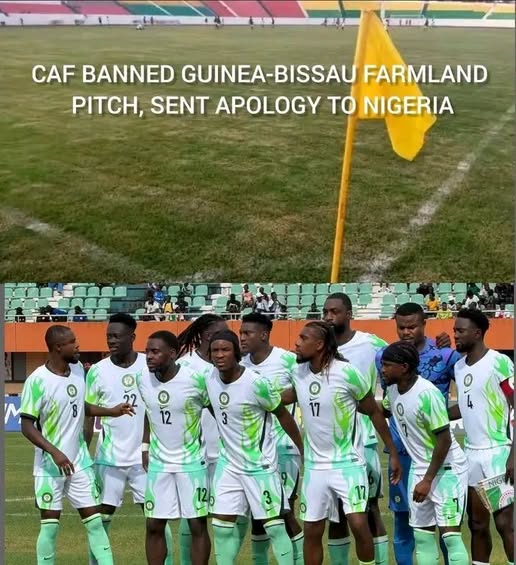
The Confederation of African Football (CAF) has reportedly banned the Estádio Nacional 24 de Setembro in Bissau from hosting further 2027 Africa Cup of Nations qualifying matches following the Super Eagles’ controversial 3-0 defeat to Guinea-Bissau.
The continental football governing body has also apologised to the Nigeria Football Federation (NFF) over the poor condition of the playing surface used for the Group L encounter.
The pitch came under intense criticism before and during the match, with concerns raised over its deteriorating condition and the potential risk of serious injuries to players.
Super Eagles head coach Éric Chelle was equally blunt in his assessment, describing the playing surface as “very, very bad” after Nigeria suffered a heavy defeat.
According to reports, Nigeria formally complained about the condition of the pitch, while Guinea-Bissau officials and players also expressed concerns over the state of the playing surface.
CAF reportedly explained that the pitch was not in the same condition when it was initially inspected and approved for the fixture.
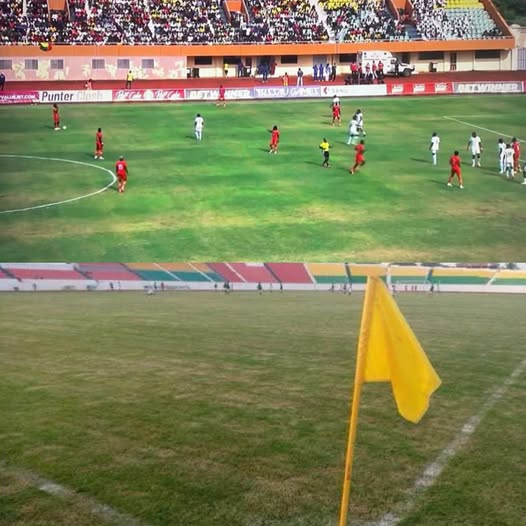
Guinea-Bissau had previously been directed to play its home matches in Morocco because of concerns surrounding the stadium. The country, however, secured approval to return to the Bissau venue after extensive repair work was carried out about a month before the Nigeria fixture.
The pitch subsequently deteriorated again, prompting renewed concerns over its suitability for an international qualifier.
The CAF decision means Guinea-Bissau will now be required to find an alternative venue for its remaining home matches in the 2027 AFCON qualifying campaign.
The development comes after Nigeria endured a disastrous night in Bissau, losing 3-0 to a Guinea-Bissau side that dominated the encounter with greater aggression and intensity.
Despite the complaints over the playing surface, Chelle admitted that the Super Eagles failed to match the hosts’ physicality and intensity and deserved criticism for their performance.
The defeat left Nigeria with three points from two Group L matches, while Guinea-Bissau moved to six points, making the dropped points particularly costly for the Super Eagles.
The CAF action is therefore expected to shift attention beyond the result itself, with the condition of African football pitches once again raising questions about player safety and the integrity of continental competitions.
While Guinea-Bissau deserved its victory on the night, the CAF sanction underscores growing concerns over the use of unsuitable playing surfaces for high-level international football.


